

General education only — not financial, legal or tax advice. The worked example is illustrative; verify the latest IRAS, CPF and MAS rules. Investments carry risk and past performance does not predict future results.
“Property never loses.” It’s the most repeated line at every Singapore dinner table — and on the surface the data agrees: official figures show private home prices have roughly doubled since 2009.¹
So this isn’t an article arguing property is a bad asset. It clearly went up. The sharper question is the one the dinner table never asks: after the entry tax, the interest, and the cash you locked away for a decade — did it actually beat the simplest alternative? And should nearly half your net worth sit in a single asset?
As of early 2025, about 44% of all Singaporean household wealth is tied up in residential property.² We haven’t just bought into “property never loses.” We’ve bet the house on it.

1. Why “property never loses” feels so true
Before the maths, the psychology — it’s not stupidity, it’s history. Our parents lived through real housing scarcity, so “property always goes up, renting is throwing money away” is inherited memory. Add recency bias — assuming the recent past repeats — and a decade of rising prices becomes a law of nature.³
In my work with clients, what changes their mind is never an argument — it’s seeing their own numbers, net of the costs nobody added up for them.
2. The entry ticket is bigger than people think
Buying a second property isn’t a 25%-down exercise. MAS caps the loan on a second home at 45%, so you fund 55% yourself — on top of a tax most people underestimate.⁴
BSD (Buyer’s Stamp Duty) is the standard purchase tax — about $44,600 on a $1.5M home.⁵ ABSD (Additional Buyer’s Stamp Duty) is the extra tax for a second property — for a citizen, 20% of the price, upfront: $300,000 on a $1.5M unit.⁶
Add it up on a $1.5M second condo: $825k down + $300k ABSD + $44.6k BSD ≈ $1.17M before you own a thing — roughly $720k of it in hard cash you can’t borrow.
3. The clock nobody counts
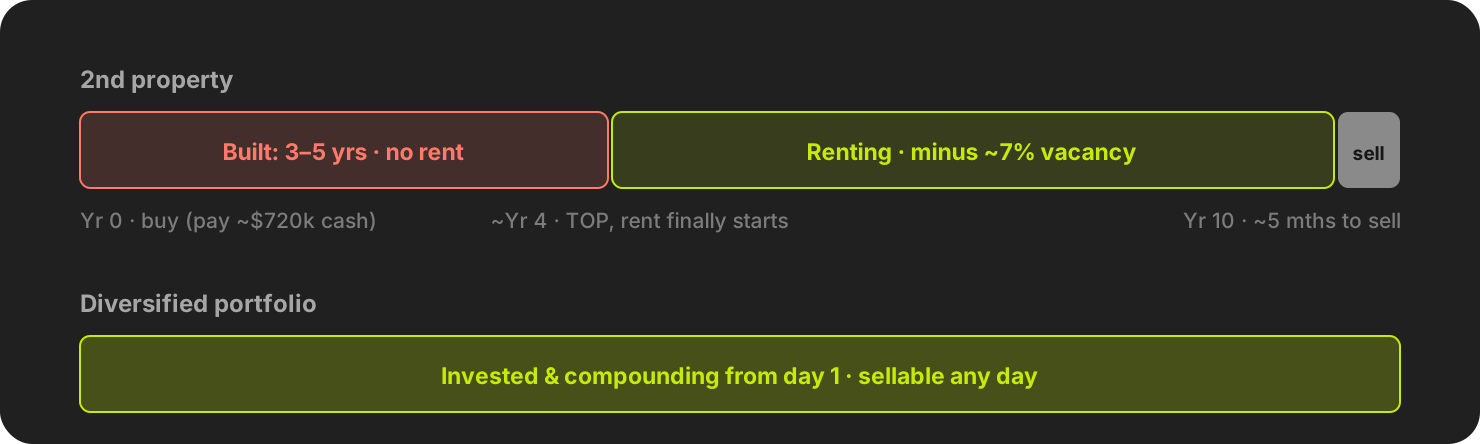
Most “property maths” assumes you buy today, rent tomorrow, and cash out anytime. None of it is true. A new launch takes 3–5 years to build before a cent of rent.⁷ Once tenanted it still sits empty between leases — vacancy hit 7.1% in 2025.⁸ And selling takes 2–6 months, not minutes.⁹
4. What’s actually left after a decade
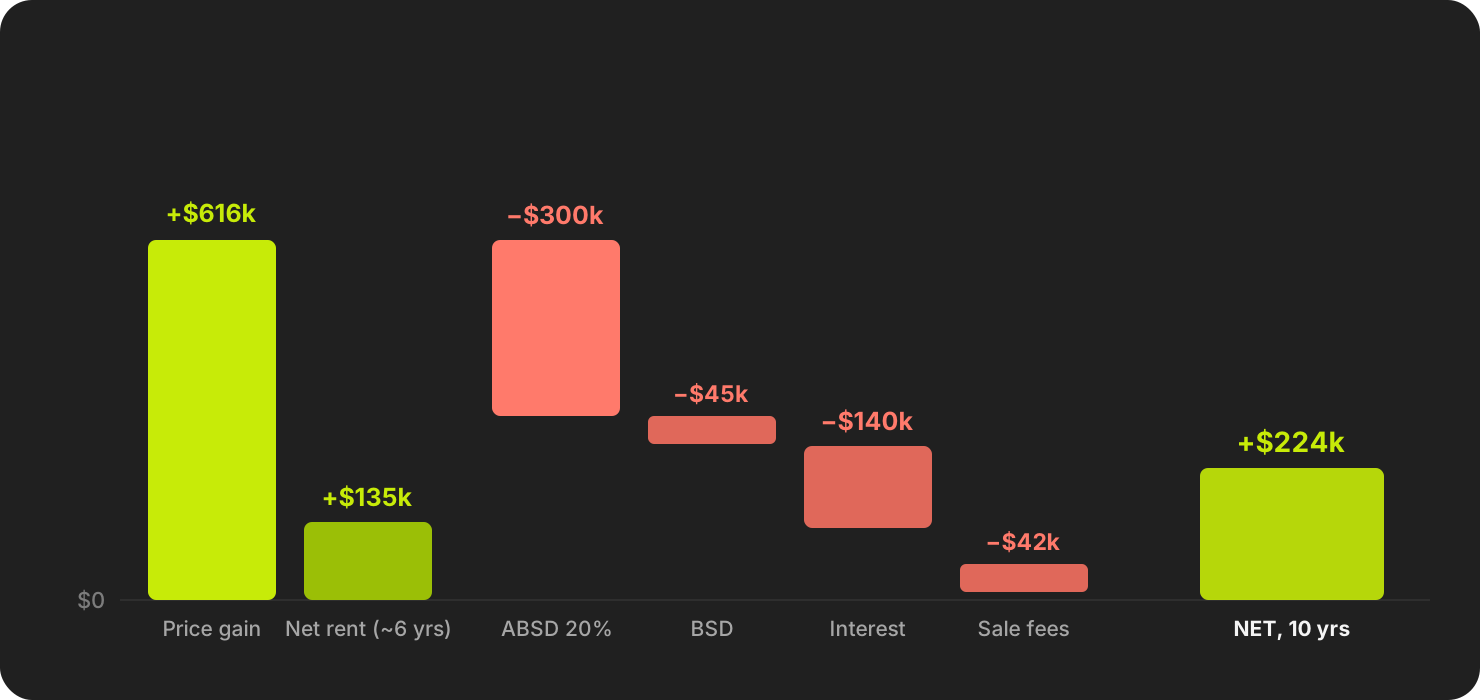
Hold a $1.5M new launch for 10 years at ~3.5%/yr growth. A $616k price gain plus only ~$135k of rent — because rent runs ~6 years, not 10, after construction and vacancy — looks like ~$751k. After 20% ABSD ($300k), $44.6k BSD, ~$140k interest and ~$42k selling costs, roughly $224k is left. Real money — but earned on more than a million dollars tied up for years.
5. Now the same cash, diversified
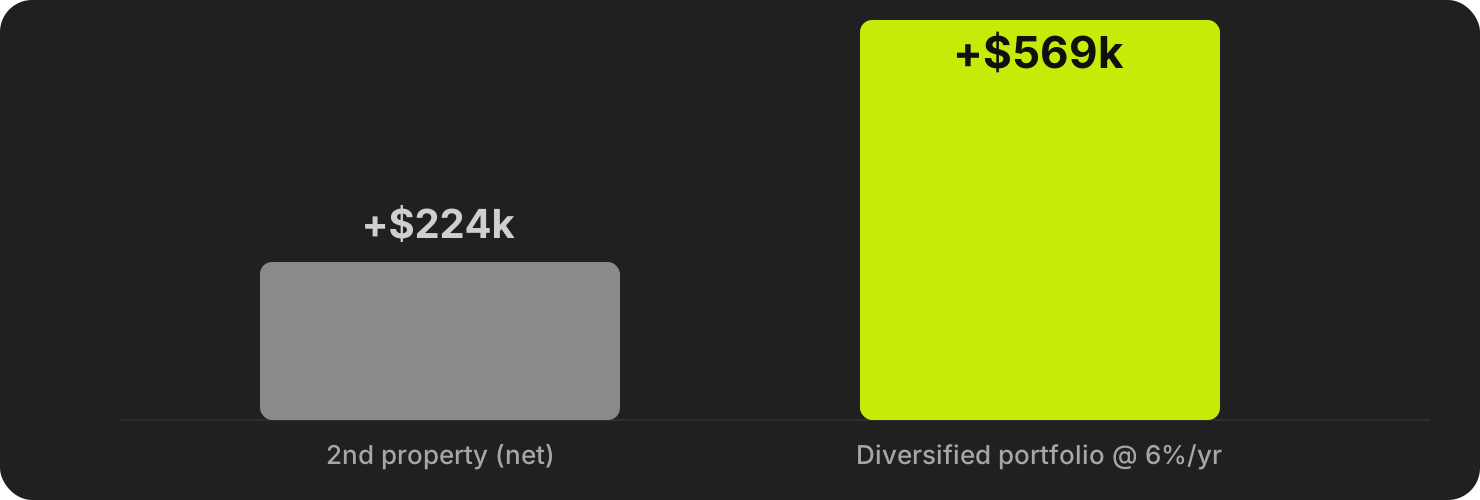
That ~$720k of hard cash — the part you couldn’t borrow? Spread it across a diversified mix of financial products instead. Long-run, global equities have returned ~7%/yr, the US market closer to 10%.¹⁰ At a deliberately conservative 6%, that cash grows to roughly +$569k over the decade — versus property’s ~$224k — with no 20% entry tax, no leverage, and sellable any morning.¹¹
6. The honest comparison
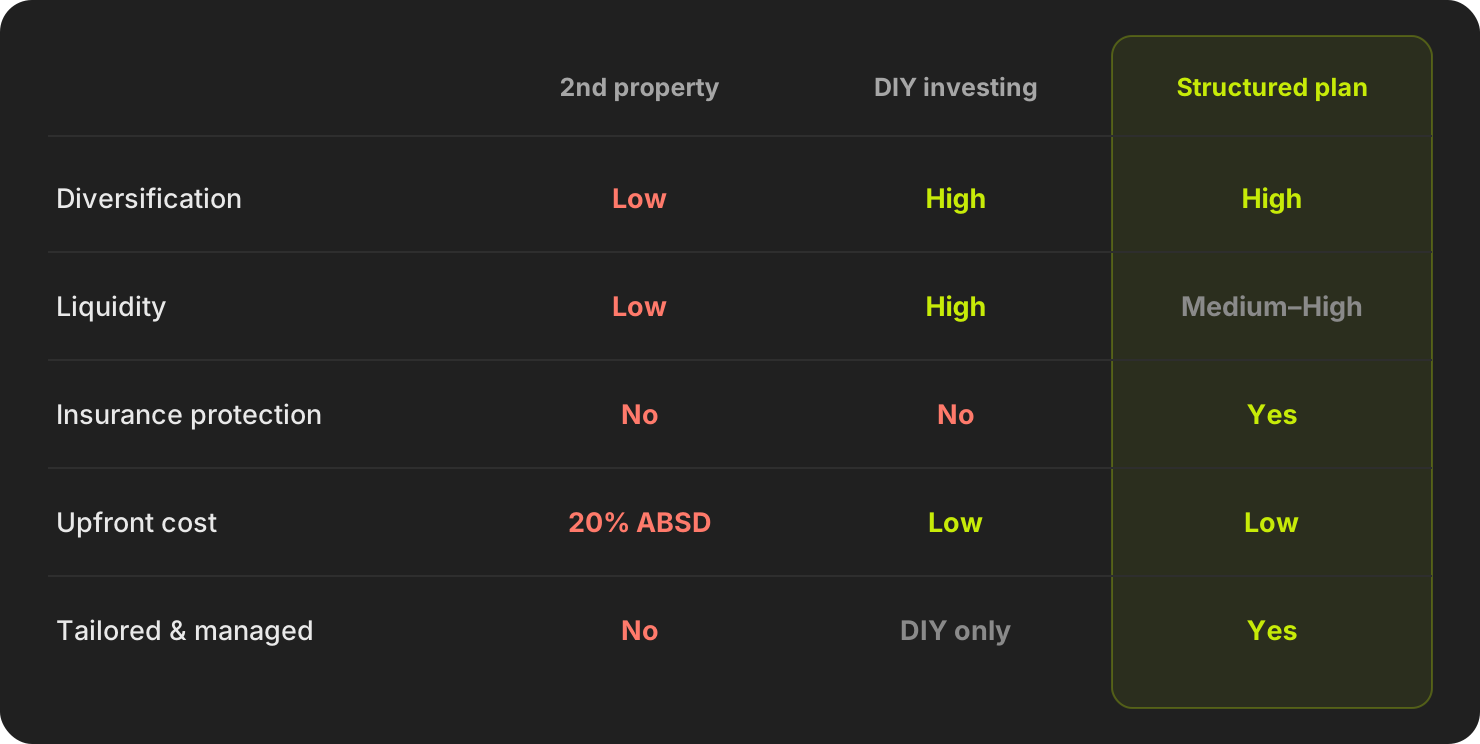
No approach here guarantees a return. A structured plan’s edge isn’t a promise of returns — it’s diversification, built-in protection, and a mix tailored to you.
7. So what should you actually do?
The real lesson isn’t “property or the market.” It’s this: don’t bet your retirement on a single asset behaving nicely. Spread money across different financial products, keep some protection in place for when life interrupts, and match the mix to your timeline and risk. No guarantees — just fewer ways for one bad event to undo years of work.
I tell clients the same thing: the goal isn’t to pick the winning asset. It’s to never depend on a single one — property or otherwise.
So before you assume the condo won — or that piling into the market is the whole answer — run your actual numbers. Not a brochure’s, not a dinner table’s. Yours.
Footnotes / Sources
URA Private Residential Property Price Index (2009 Q1 = 100): 209.4 in Q4 2024 — roughly double the 2009 base. data.gov.sg / URA.
Residential property ≈ 44% of household assets, Q1 2025. SingStat — Household Sector Balance Sheet.
Recency / anchoring bias in investment decisions. NIH / NCBI systematic review.
Second-property loan-to-value capped at 45% (55% down); TDSR 55%. MAS — MSR & TDSR rules.
Buyer’s Stamp Duty — about $44,600 on a $1.5M home. IRAS — BSD.
Additional Buyer’s Stamp Duty — 20% for a citizen’s second residential property (since 27 Apr 2023). IRAS — ABSD.
New-launch condos typically take 3–5 years to TOP. Stacked Homes.
Private home vacancy 7.1% in Q2 2025. ERA, citing URA.
Selling a condo typically takes ~2–6 months. Propkaki.
S&P 500 long-run ≈ 10%/yr nominal over 30 years. Fidelity.
MSCI World ≈ 7.2%/yr since 1998; a conservative 6% used here. Past performance does not predict future results. Curvo / MSCI World.
Recent Post


Creative gold for your inbox
Get the latest articles and insights delivered straight to your inbox. Sign up today to stay informed and ahead of the competition.